
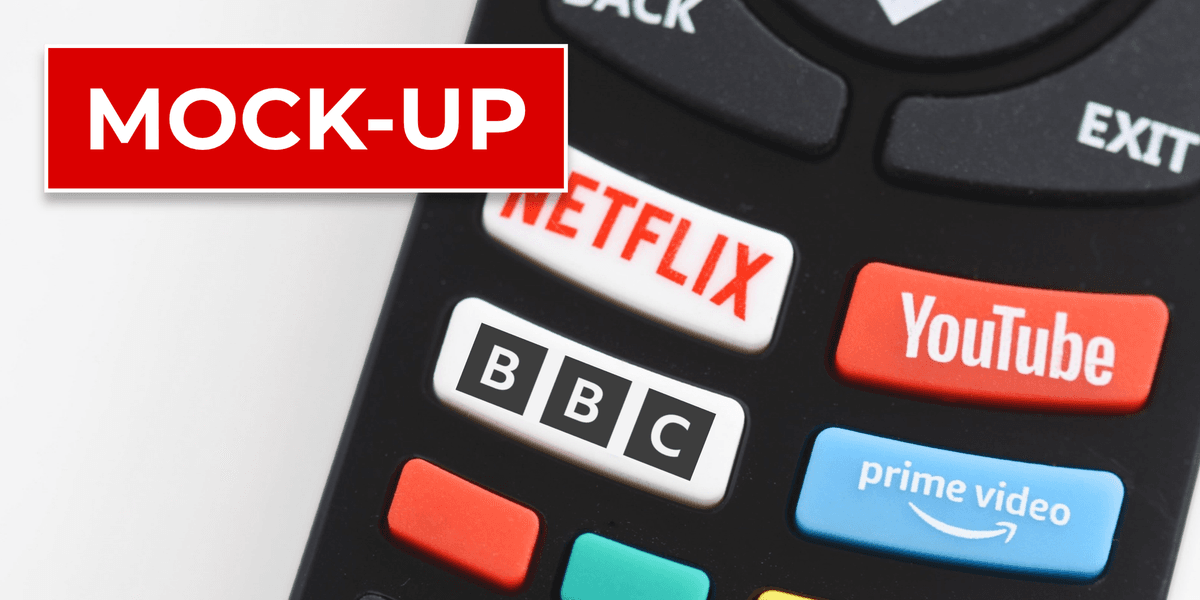
BBC demands dedicated button on Britons’ TV remotes so audiences ‘stay connected to British values’

The BBC has called on Labour ministers to ensure its services are accessed more easily with a dedicated button on Britons’ TV remotes.
In its submission responding to the green paper on the future of UK media, the corporation argued that “public service broadcasters” deserve greater visibility so they can compete with well-funded private streaming rivals.
Companies such as Netflix and YouTube pay manufacturers to secure branded buttons on remotes, including those for the Amazon Fire Stick.
The BBC wants an equivalent arrangement for public service media, directing viewers towards its linear and on-demand offerings.
The public broadcaster said: “Remote controls continue to be one of the most popular gateways to content.
“Global content competitors with significant financial resources, negotiating worldwide distribution deals with device manufacturers, can secure branded remote control buttons that take viewers directly to their service for dedicated Netflix buttons.”
The BBC added: “PSM providers should also have prominence on remote controls for our linear and on-demand services, and those buttons should be branded on the same basis as other content providers’ buttons.”
Beyond television, the broadcaster also urged ministers to safeguard radio’s position in vehicles by “securing the availability and prominence of radio in-car”.

Could this be YOUR remote if the BBC has its way? GB News mocks up what the corporation is pushing for in Britons’ living rooms
|
GETTY
The measure could involve installing a button on dashboards or steering wheels to connect passengers directly to BBC stations.
The corporation claimed such measures would safeguard the public’s connection to British culture and “trusted journalism”.
It warned: “Without the right framework, it is harder for audiences to find trusted, high-quality content that reflects the UK’s cultures and values, particularly as global platforms increasingly control how content is surfaced.”
Roughly 49.5 million people access BBC content every month, according to figures from the independent ratings body Barb.
BBC – READ THE LATEST HEADLINES:

The BBC said the prominence measures would safeguard the public’s connection to trusted journalism
|
GETTYBut YouTube’s reach has consistently surpassed the BBC’s monthly audience since Barb began tracking the platform in October, measuring viewers who watched for at least three consecutive minutes.
The corporation is also grappling with a notable decline in licence fee revenue.
Over the summer, it emerged that 500,000 fewer TV licences had been sold compared with the previous year.
That represented the sharpest drop since 2020/21, when the number of paying households fell by approximately 740,000.

The BBC also urged ministers to safeguard radio’s position in vehicles by ‘securing the availability and prominence of radio in-car’
|
PA
Over the past few days, speculation has been swirling that the fee could be abolished, but replaced with a new £11 monthly charge that will automatically be added to household broadband bills.
Ministers are understood to be examining a proposal that would see the levy, which funds the public broadcaster, overhauled.
The plan, dubbed the “Home Internet Levy,” would mean every home with an internet connection contributes to funding the corporation, regardless of whether anyone in the household tunes into live television.
Under the scheme, the current £180 annual TV licence would be scrapped entirely, with the new cost instead collected through broadband providers.

Comments are closed.