
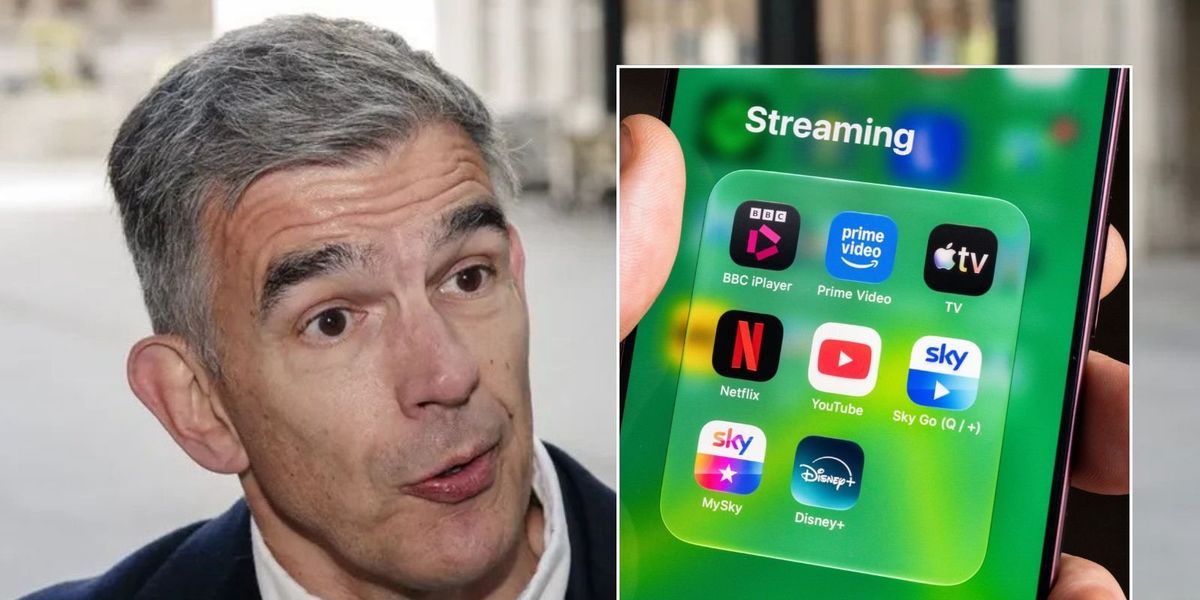
BBC News ‘should be streamed on Netflix and Instagram’ as boss considers universal household levy

BBC news could soon appear on Netflix, TikTok and Instagram as the broadcaster considers a major shake-up of how it reaches viewers.
The plans come as the corporation faces growing financial pressure, with more than half a million TV licences lost in a single year.
BBC director-general Matt Brittin wants the broadcaster to make its content available on the platforms people already use, rather than relying solely on its traditional television channels and streaming services.
Speaking on the BBC’s Sunday with Laura Kuenssberg, Mr Brittin said: “I’d like to see reform that allows us to be where audiences are.”
“I think BBC content should be on Netflix, on YouTube, on TikTok, on Spotify, and Instagram, and everywhere where audiences are.”
He said making BBC news more widely available was particularly important to help tackle the spread of false information online.
“Particularly news, actually, which I think is part of disinfecting misinformation,” he said. “It’s our job to be everywhere.”
His proposals come as the BBC faces increasing pressure over how it is funded, with growing numbers of households choosing not to pay the £180 annual TV licence fee.
Mr Brittin has repeatedly described the current funding model as “no longer fit for purpose”, arguing that it is restricting the corporation’s ability to adapt to changing viewing habits.
Over the past decade, income from the licence fee has fallen by more than £1billion after accounting for inflation.
The decline has continued, with the BBC’s 2026 annual report revealing that more than 500,000 TV licences were lost during the 2025/26 financial year alone.
Under the current rules, households need a TV licence to watch or record live television on any channel or streaming service, or to watch programmes on BBC iPlayer.
However, people who only watch on-demand programmes on services such as Netflix generally do not need one.
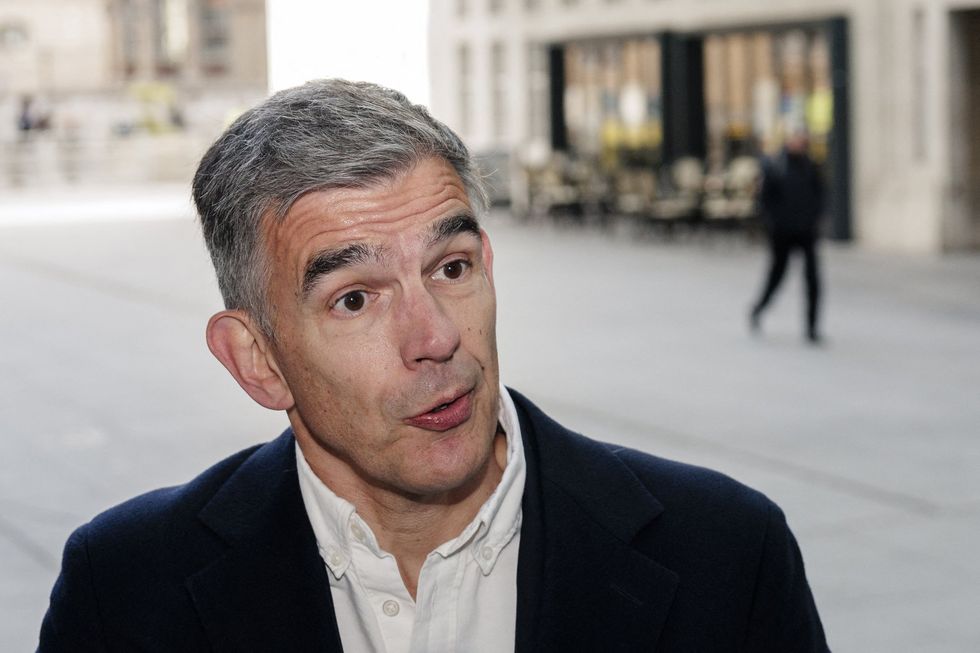
Mr Brittin has repeatedly described the current funding model as “no longer fit for purpose”
|
GETTYAs more viewers move away from traditional television towards streaming and social media, the BBC faces the challenge of reaching those audiences while maintaining the income needed to fund its services.
Mr Brittin’s preferred alternative is a universal household levy, a model already used in countries such as Germany, Switzerland and Austria.
Under such a system, nearly all homes would contribute a monthly fee to fund the BBC regardless of whether they watch its output.
He argued there is a fundamental equity problem with the current arrangement. “Ninety four per cent of households every month are consuming BBC content,” he said. “That’s incredible, but yet only 80% are paying.”
“So there’s a fairness issue there in terms of how we fund the BBC and I think that the principle is if we want a BBC that’s for everyone, then it needs to be funded by everyone, and how you get that modernisation is critical.”
 BBC to axe 500 jobs | PA
However, Mr Brittin acknowledged the proposal would represent “quite a big shift,” particularly given the cost-of-living pressures facing households across the country.
He was careful to stress that the universal levy is not a formal BBC proposal but rather one of several ideas being explored.
“What we’re advocating is reform that allows us to offer the services universally and that is modernised towards where people are watching today,” Mr Brittin said.
He also pointed to a recent report suggesting that a system where every household contributes would allow individual charges to be lower. “Collections costs are lower, there’s limited evasion,” he noted.
The debate over the BBC’s future funding model is taking place against the backdrop of the corporation’s royal charter, which expires in December 2027.

Matt Brittin says the broadcaster must reach audiences beyond traditional television
|
NETFLIX | OPEN AI | GB NEWSThe charter governs how the BBC operates and is funded, and must be renewed every ten years.
Culture Secretary Lisa Nandy offered her backing for the BBC’s efforts to secure its financial future.
Asked whether the licence fee was finished, she replied: “No, I don’t think the license fee is finished, but we are looking at a number of options through the charter. It is our firm intention to put the BBC on a sustainable financial footing and it hasn’t been for over a decade.”
Ms Nandy expressed sympathy for Mr Brittin’s position, saying he had inherited an organisation battered by a decade of shrinking revenues, changing viewing habits and government decisions to freeze the fee or pile on extra obligations.
She insisted, however, that certain BBC services remain “non-negotiable.” Regional programming, children’s content and news output are provided “to people in this country as of right,” she said, adding that the government is working with BBC leadership on that basis.

Comments are closed.