

Margaret Hamilton, an early computer pioneer whose software helped put the Apollo 11 astronauts on the moon, has died at age 90.
Mrs Hamilton is most well-known for developing the Apollo Guidance Computer after being hired by the Massachusetts Institute of Technology (MIT), which today announced her death.
She learned programming through hands-on work in MIT’s meteorology department because, in the 1960s, computer science and software engineering were not yet established disciplines.
She was also credited with popularising the term software engineering, using the term while at Nasa to give her team legitimacy.
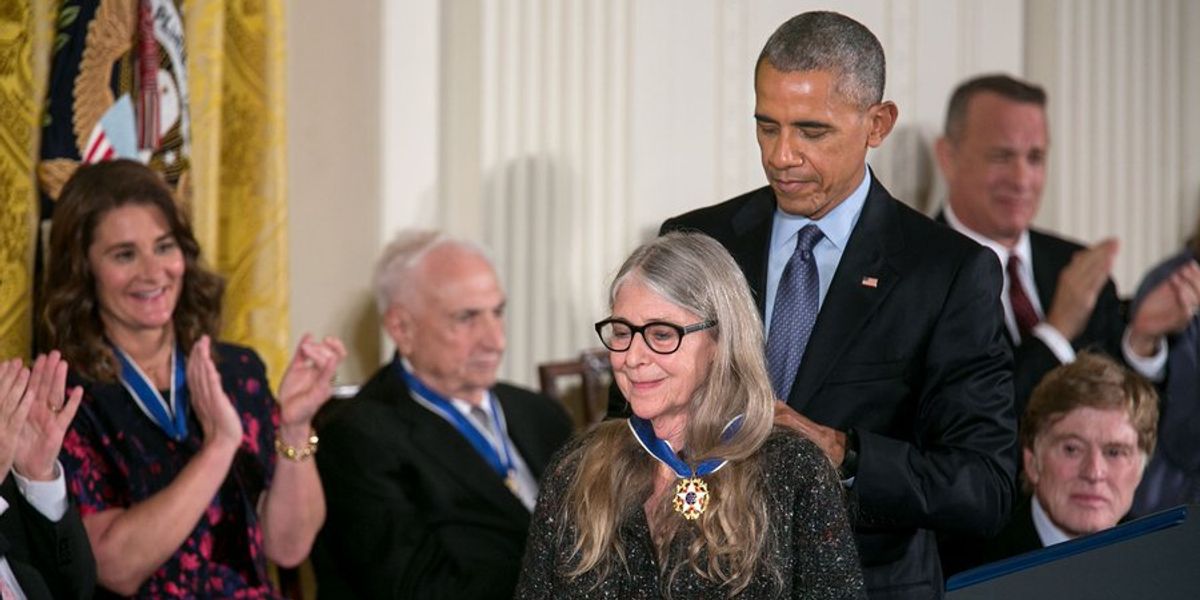
Mrs Hamilton received several awards throughout her life, notably the 2016 Presidential Medal of Freedom from Barack Obama.
His citation read: “Hamilton defined new forms of software engineering and helped launch an industry that would forever change human history.
“Her software architecture led to giant leaps for humankind, writing the code that helped America set foot on the moon.”
In a statement attached to the announcement of her death, Apollo Program Professor of Astronautics and Engineering Systems Olivier de Weck said it would be a “dramatic understatement” to describe her as “ahead of her time”.

Margaret Hamilton standing next to printouts of her team’s software
|
DRAPER LABORATORY
He said: “She was a software engineer at a time when that field was in its infancy, and she not only developed advanced code herself, but also led a team in using that nascent technology to develop one of the most complex systems humanity had ever achieved.
“The Apollo program still stands as one of our greatest testaments to the power of collaboration, ingenuity, and engineering, and Margaret Hamilton was a fundamental contributor to that program’s success. And for her that was just the beginning.
“She went on to become an entrepreneur and remained on the cutting edge of systems software throughout an extraordinary career, while acting as an advocate, mentor, and inspiration to millions.”
He added: “Margaret Hamilton has been an inspiration to generations of computer scientists and engineers. Hers was a career dedicated to preventing errors and what she called ‘handling the unknown’.”

Margaret Hamilton is credited with popularising the term software engineering
|
MIT
MIT credited her with pioneering “defensive” programming, developing software to prevent errors to anticipate or fix errors by itself.
After the Apollo 11 mission, the division of MIT she worked at, the Instrumentation Lab, spun out of the institution to become the independent Draper Laboratory.
While she did not join them, Draper CEO Jerry M Wohletz said she made an “indelible mark” on the firm.
“Through her leadership and contributions to the development of the onboard flight software for Nasa’s Apollo Guidance Computer, she helped ensure that Apollo astronauts landed safely on the lunar surface and safely returned home,” he said. “We will honour her legacy at Draper forever.”

Margaret Hamilton was honoured with the Presidential Medal of Freedom from Barack Obama in 2016
|
WHITE HOUSE
Nasa Adminstrator Jared Isaacman said the best way to honour Mrs Hamilton’s legacy was to continue exploring space.
He said: “Margaret Hamilton was a pioneer whose work helped make Apollo and humanity’s first journeys to the Moon possible. The best way to honour her legacy is to finally pick up where her generation left off and never stop going.”
Nasa, in a statement, said her “trailblazing work” would “forever be remembered”.
She received the Exceptional Space Act Award from the space agency in 2003, and became an official Lego minifigure in 2017.
Mrs Hamilton is survived by her daughter, Lauren Hamilton; her son-in-law, Richard Selesnick; two grandsons; and four great-grandchildren.
A memorial service in Cambridge, Massachusetts, will take place in spring, MIT said in its statement.

Comments are closed.