
John Swinney’s wife forced to step down from BBC as ‘excruciating’ condition leaves her unable to speak

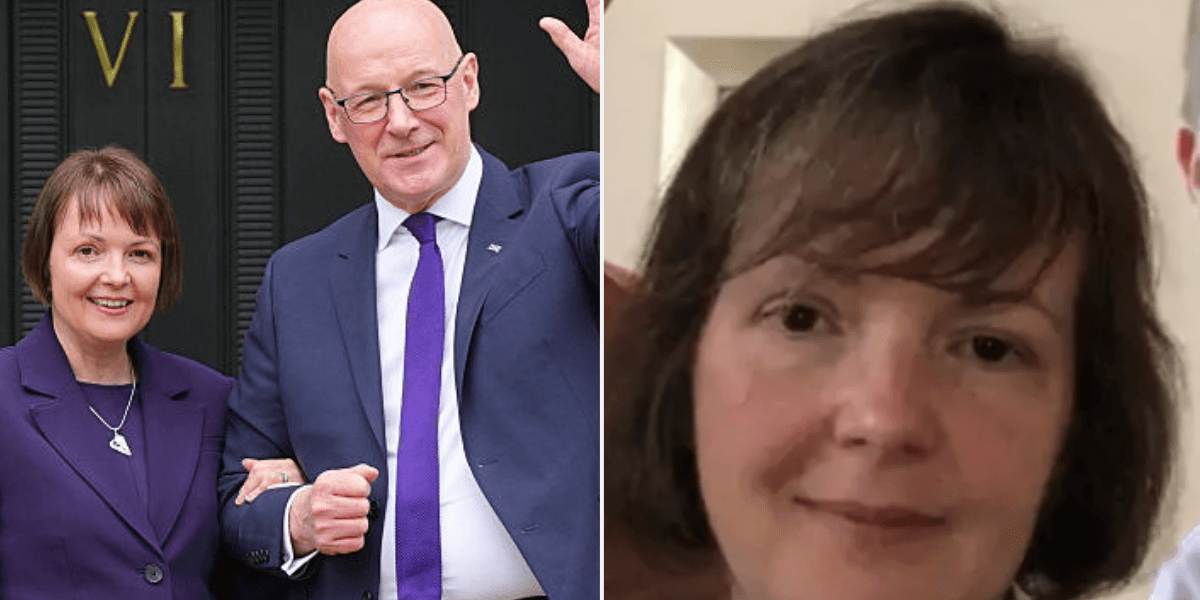
Elizabeth Quigley, the veteran BBC Scotland journalist and wife of First Minister John Swinney, has announced she is stepping down from the corporation on health grounds after a career spanning more than a quarter of a century.
The broadcaster, who has lived with multiple sclerosis for 26 years, said a condition called trigeminal neuralgia had forced her hand.
She described it as causing “excruciating pain like an electric shock across the side of my face, which can stop me from speaking, eating or drinking.”
For someone whose profession depends entirely on the spoken word, the condition proved insurmountable.

Elizabeth Quigley is married to Scotland’s First Minister John Swinney
|
GETTY
Although her neurologist and NHS team helped her recover her speech and reduce discomfort, Ms Quigley said the pain could return without warning.
Ms Quigley joined BBC Scotland in November 1999, having previously cut her teeth at the Scotsman, Scotland on Sunday and the Scottish Daily Mail.
At just 28, she made history as the BBC’s first female political correspondent covering the newly established Scottish Parliament.
Within three months of taking up the role, however, she received a life-altering diagnosis.

Ms Quigley has announced she is stepping down from the BBC after more than 25 years
|
BBC
What she had assumed was a dental issue, a peculiar pins-and-needles sensation in her face, turned out to be something far more serious.
An MRI scan swiftly confirmed multiple sclerosis.
The news came as a shock to the young journalist, who, by her own admission, knew virtually nothing about the degenerative condition.
No treatment was offered at the time; she was simply told to stay healthy and steer clear of stress.

The broadcaster was diagnosed with multiple sclerosis shortly after beginning her political correspondent role
|
BBC
For several years, Ms Quigley managed to keep her condition hidden from colleagues, but by 2007 her increasingly unsteady gait could no longer be explained away.
She felt compelled to go public with her diagnosis.
By that point, she had transitioned away from political journalism, a move necessitated in part by her relationship with MSP John Swinney, whom she married.
Mr Swinney went on to serve as a Scottish government minister before becoming first minister.
Ms Quigley produced television and radio documentaries exploring the condition, highlighting that Scotland was thought to have the world’s highest rates of MS.
She expressed hope that a cure, or at least answers about its prevalence in Scotland, might one day be found.
The birth of her son Matthew in 2010 brought an unexpected revelation.
During pregnancy, her MS symptoms largely subsided, her mobility improved, and she regained dexterity in typing and writing.

The veteran journalist has continued her broadcasting career while living with multiple sclerosis
|
GETTY
Ms Quigley discovered this phenomenon was not unique to MS, noting it could also occur in women with other autoimmune conditions such as rheumatoid arthritis and thyroid disorders.
Her investigation, which she turned into a radio documentary, pointed to hormones playing a significant role, with much more research still needed.
The symptom relief persisted for roughly nine months after Matthew’s arrival before her condition reasserted itself.
Her MS has since progressed from relapsing-remitting to secondary progressive, leaving her increasingly reliant on crutches, a rollator, which she calls “my wheels”, and occasionally a wheelchair.
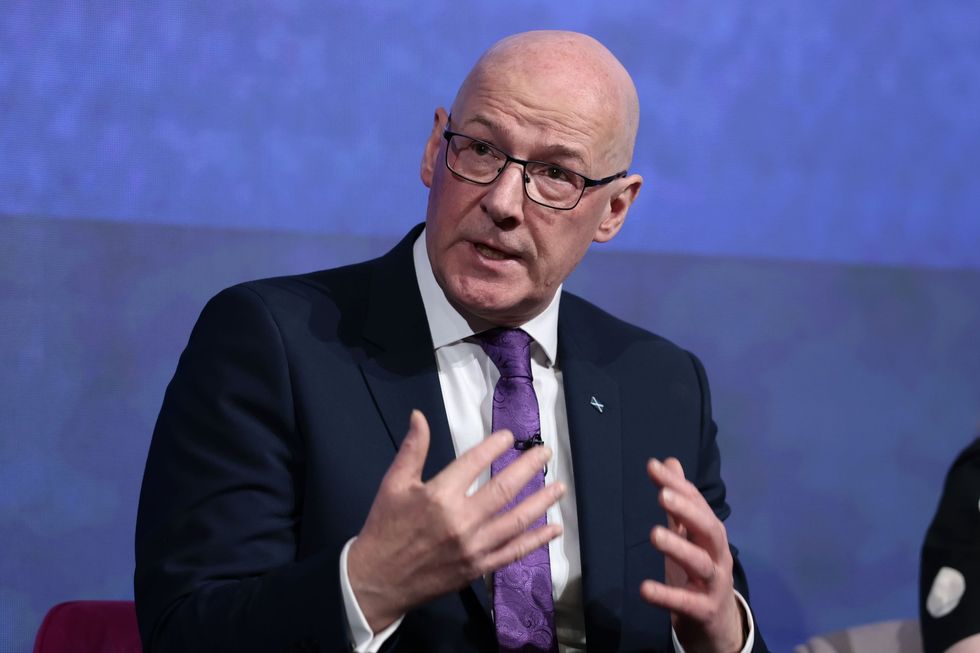
John Swinney has served as Scotland’s First Minister since 2024
|
GETTYDespite the advances in treatment since her diagnosis in 2000, when very few disease-modifying therapies existed compared with roughly 20 today, a cure for MS remains elusive.
Ms Quigley adapted her working methods throughout her career, recording interviews and editing from home to keep producing journalism.
Among her notable later work was a pioneering film about a woman whose sense of smell could aid in diagnosing Parkinson’s disease.
The journalist made a point of refusing to conceal her disability, choosing to stand visibly with a crutch on the steps of Bute House when Swinney became first minister.
“I’ve always maintained that you can live life well with MS; it might just have to be a bit different,” she said. “And my career proves that.”
Ms Quigley expressed deep gratitude to colleagues who supported her over the years, adding that the moment had arrived to close one chapter and embark on another.

Comments are closed.