Prime Minister Mark Carney has designated the proposed West Coast oil pipeline — now branded Pacific Link — as a project of national interest, the first listing under the federal Building Canada Act and the clearest signal yet of how far Ottawa's energy politics have moved.
The announcement, made October 1 in Fort McMurray alongside Alberta Premier Danielle Smith, places the roughly 1,250-kilometre line from Bruderheim, Alberta to a deepwater port near Delta, British Columbia under the new Major Projects Office, which will run a single streamlined federal review with public hearings through the Canada Energy Regulator. The office aims to finalise the project's conditions by September 1, 2027.
Pacific Link is designed to move up to one million barrels of crude a day — more than the expanded Trans Mountain line's 890,000 — primarily to Asian markets. Ottawa and Alberta have agreed to split most of the investment cost, with independent estimates running from $35 billion to $44 billion. Pembina Pipeline has signed a non-binding agreement for a 10 percent stake, with an option to double it, and Ottawa has doubled its Indigenous loan-guarantee programme to $10 billion so communities along the route can buy equity rather than merely be consulted.
The politics are as significant as the engineering. Ninety percent of Alberta's oil currently flows to the United States, a dependence Carney cited directly in Fort McMurray, arguing Pacific Link will materially reduce it. The designation lands weeks before Albertans vote October 19 on whether to hold a separation referendum; Smith, who says she will vote to stay in Canada, presented the pipeline as cooperative federalism working — while critics across the spectrum asked why a pipeline needs Ottawa's permission to be fast-tracked, or why taxpayers are underwriting one at all.
Significant obstacles remain. British Columbia has refused a northern route, fixing the line's path to the southern Roberts Bank terminal. Environmental groups and some Indigenous communities have raised climate and marine concerns. And the timeline is long: even on the government's schedule, construction could not begin before late 2027, with independent analysts placing a final investment decision in 2028-29 and first oil in the early 2030s.
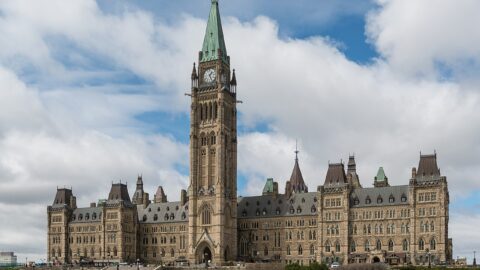
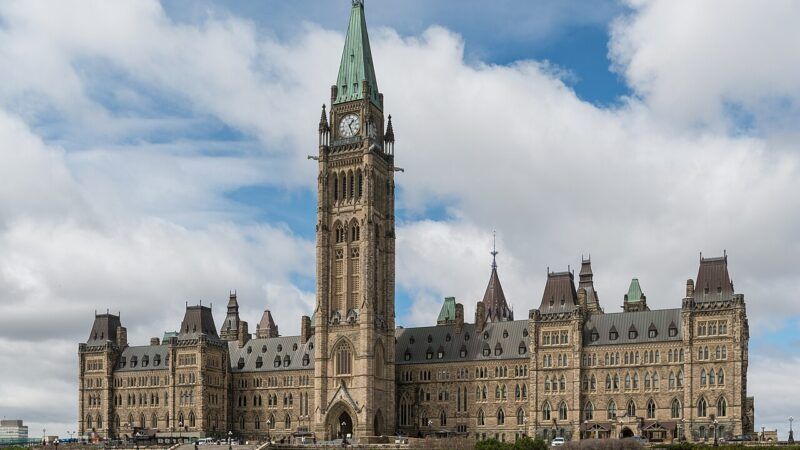
In Parliament, the designation will test the Building Canada Act itself — legislation passed with Conservative support that lets cabinet shorten approvals for projects it deems nationally significant. Supporters call it nation-building with deadlines; opponents call it an end-run around environmental law and Indigenous rights.
What is not in dispute is the direction of travel. A federal government designating oil pipelines as national-interest projects, in partnership with Alberta, to loosen dependence on the United States, would have been implausible politics a decade ago. Pacific Link is now the proof of concept — pending, as always in Canadian pipeline history, the small matter of actually building it.
The designation's structure will be studied as closely as the pipeline itself. Under the Act, listing confers a single-window review and the promise of conditions within a defined period — in this case, by September 2027 — but it does not approve construction, exempt the project from Indigenous consultation, or silence the courts. Environmental groups are already preparing the legal arguments that tested previous governments' fast-tracks, and the Roberts Bank terminal sits in one of the most ecologically contested estuaries in the country.
British Columbia's position adds a provincial wrinkle the federal-provincial choreography has so far stepped around: Victoria refused the northern route and has its own conditions on the southern one. The Major Projects Office's consultations — more than 130 Indigenous communities were engaged before the listing — will now move from exploratory to adversarial, with equity offers that may decide which nations negotiate and which litigate.
Carney's government has staked its economic identity on building at a speed Canada is not known for. Pacific Link is the largest test of that identity yet: a $40-billion lesson in whether designation, deadlines and public money can compress a decade of pipeline process into something shorter. The oil, if it ever flows, arrives in the 2030s. The verdict on the method arrives much sooner.