From Charlottetown to Edmonton, Canadian governments are reaching for the same lever this autumn: suspending fuel taxes to shield drivers from pump prices pushed upward by oil above US$100 a barrel. The scramble says as much about the politics of affordability as it does about energy markets.
Prince Edward Island has suspended its provincial fuel tax for four months, taking roughly nine cents a litre off gasoline and 14 cents off diesel, timed to run alongside Ottawa's move. The federal government has introduced legislation to extend its fuel-excise holiday through January 31, 2027 — worth about 10 cents a litre on gasoline and four cents on diesel — after which PEI plans to restore its tax at half rate next February before returning to full rates in April.
Alberta went furthest, zeroing its 13-cent-per-litre tax from October 1 through the end of 2026 — and then watched Calgary prices rise anyway as crude overwhelmed the relief. The contrast across the country is stark: British Columbia still carries the highest fuel taxes in Canada, about 27 cents a litre on gasoline, with Quebec next at roughly 19 cents, while the national average pump price sits near $1.85 for gasoline and $2.75 for diesel, according to CAA figures.
Economists watching the wave of holidays repeat two cautions. First, tax suspensions only help if retailers pass them through — wholesale and crude costs, which provinces do not control, set most of the pump price. Second, the holidays are expensive: every cent per litre forgone is revenue provinces must replace, borrow or cut around, and the bills run to hundreds of millions.
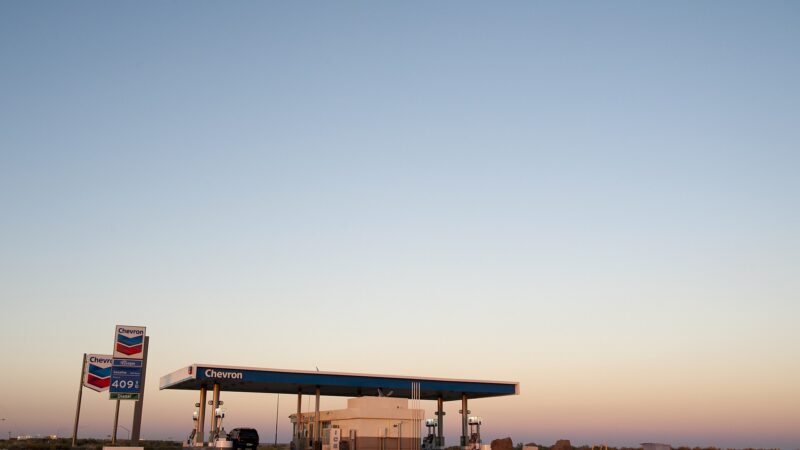
The political logic is nonetheless irresistible. Fuel prices are the most visible price in Canadian life, posted on signs every driver passes daily, and diesel's surge feeds directly into grocery and freight costs. A government seen to act at the pump buys goodwill even when the market takes the gift back within the week — as Alberta's drivers learned when prices jumped 20 cents in the seven days after the tax disappeared.
What none of the holidays changes is the underlying exposure: Canada produces oil and still imports price shocks, because pump prices follow global crude. Until that market calms, provincial finance ministers will keep competing to be seen cushioning a blow they cannot actually soften.
The pass-through problem haunts every one of these holidays. Pump prices are set at the rack by wholesalers responding to crude and refining margins hours before they are set by tax policy; a province can legislate its cents away in an afternoon and watch the market repossess them by the weekend. Alberta's October experiment — tax gone on the first, prices up twenty cents by the seventh — will be cited in finance-ministry briefing books for years, by both sides: proof the relief is futile, or proof it would have been worse without it.
What the holidays do reliably deliver is timing. Ottawa's excise extension to January 2027, PEI's four-month window, Alberta's quarter — all are calibrated to expire after winter, when heating and driving costs bite hardest and governments most need to have been seen trying. Economists call this suboptimal policy. Politicians call it Tuesday.
Drivers, meanwhile, have learned to read the only number that matters — the one on the sign — and to understand that it is written in Vienna, Riyadh and the Strait of Hormuz long before it is written in any provincial capital.