Somewhere between the planets, a European spacecraft the size of a small truck is flying toward the most promising neighbourhoods for life beyond Earth — and it is not heading for Mars.
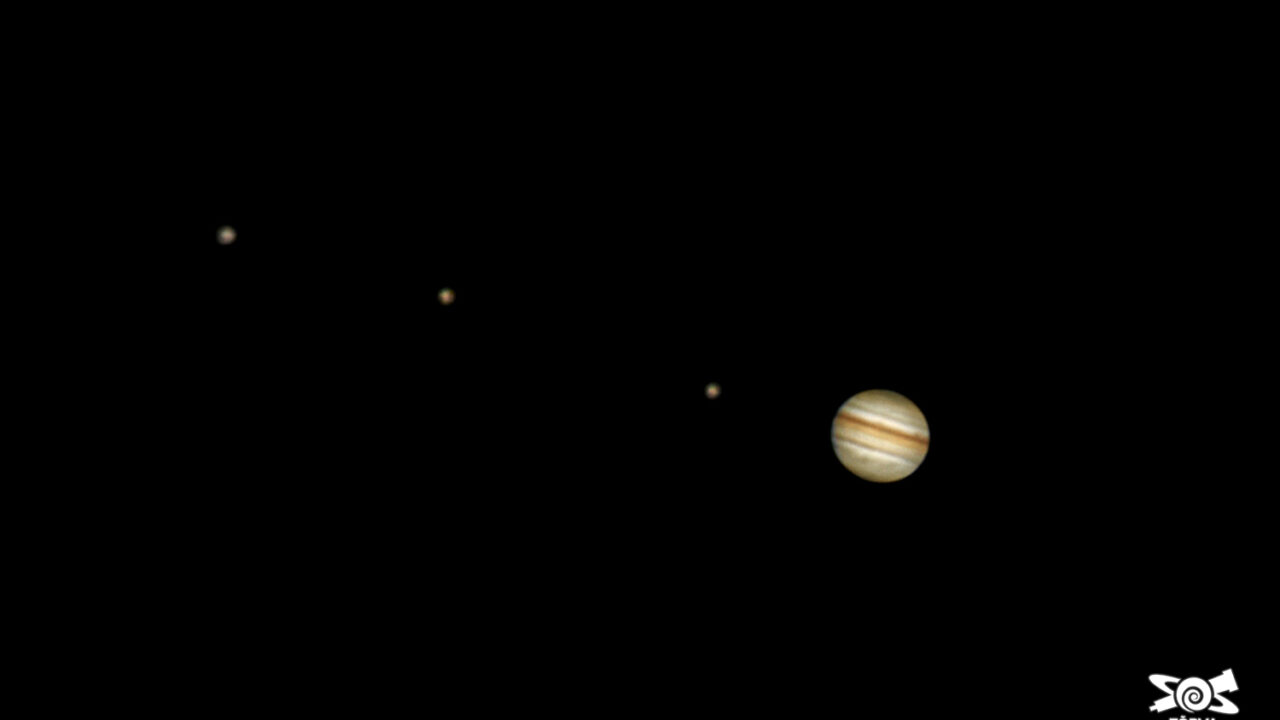
JUICE, the European Space Agency's Jupiter Icy Moons Explorer, is bound for the three ocean moons of Jupiter: Ganymede, Europa and Callisto. Beneath their ice shells, scientists believe, lie global saltwater oceans containing more liquid water than every sea on Earth combined. JUICE's mission is to find out whether those oceans could be habitable — and eventually, to orbit Ganymede, becoming the first spacecraft ever to circle another planet's moon.
The science case rests on a revolution in thinking. For most of the space age, the "habitable zone" meant planets at the right distance from a star. The icy moons rewrote it: tidal forces from Jupiter knead their interiors, keeping oceans liquid in darkness, at distances where sunlight is a rumour. If life needs water, chemistry and energy, the ocean moons may offer all three — in volumes that dwarf Earth's biosphere.
JUICE carries instruments to test each ingredient. Radar will sound the ice; magnetometers will detect the signature of salty oceans conducting electricity; spectrometers will taste the surface chemistry for material dredged up from below. Flying past Europa — the moon whose cracked ice and possible plumes make it the favourite — JUICE will assess where a future lander should touch down.
The journey is a lesson in patience and celestial billiards. Launched in 2023, JUICE gains speed from planetary flybys — Earth, Venus, Earth again — across an eight-year cruise, arriving at Jupiter in 2031, then touring the moons for years before settling into Ganymede orbit. Each flyby doubles as a rehearsal and a science opportunity; the team has already used encounters to calibrate instruments and study moons en route.
It will not travel alone in the story. NASA's Europa Clipper is making the same pilgrimage on a faster clock, and the two missions are designed to complement rather than duplicate: Clipper focuses on Europa, JUICE on Ganymede and the system. Between them, the 2030s promise a reconnaissance of the ocean worlds thorough enough to design what comes next — a lander, a cryobot, a sample.
Canada has no instrument on JUICE, but Canadian planetary scientists work the same questions from the Arctic, where ice-covered lakes and subglacial environments rehearse the conditions ocean-moon explorers will meet. The search for life, it turns out, may run through the Canadian high north as surely as through Jupiter's cold light.
When JUICE arrives, it will be looking down at oceans no eye has seen. Everything astrobiology hopes for the next fifty years is under that ice.
The strategy behind two flagship missions reflects how the field has matured. Rather than competing for a single destination, agencies have begun dividing the outer solar system into questions: JUICE will characterise Ganymede — the only moon with an internally generated magnetic field, and the end state of icy-moon evolution — while Europa Clipper interrogates the moon most likely to be habitable now. Together they bracket the possibilities, which is what a scientist designing the first ocean lander actually needs.
The Canadian thread runs deeper than analogy. Canadian researchers contribute to the mission's extended scientific community, Canadian universities train the cryosphere scientists both missions draw on, and the Canadian Space Agency's own lunar programme is built on the premise that expertise earned in Arctic ice is exportable to the solar system. When JUICE begins returning Ganymede's secrets in the 2030s, some of the people interpreting them will have learned their trade on Devon Island.
Eight years of cruise remain. In deep-space terms, that is not a delay — it is the price of admission to the outer system, paid in patience, for oceans that have waited four billion years to be looked at properly.