On October 19, Albertans will vote on whether to hold a referendum on separating from Canada — a ballot that began as a separatist movement's pressure campaign and has become the defining drama of the province's relationship with Ottawa.
The vote asks whether Alberta should proceed to a formal referendum on leaving Confederation. Premier Danielle Smith has said she will vote to keep Alberta in Canada, while acknowledging that support for separation — recorded at roughly 22 percent in recent polling — remains too high for her liking. Her government has spent the year trying to drain the movement's fuel: grievance with Ottawa over energy policy.
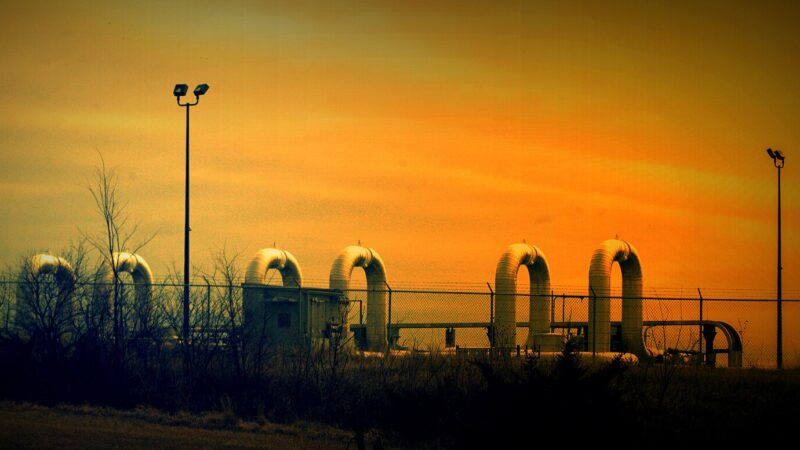
That strategy produced its biggest exhibit this month, when Prime Minister Mark Carney stood with Smith in Fort McMurray to designate the Pacific Link pipeline a national-interest project. Smith presented the fast-tracked line to the Pacific as proof that cooperative federalism can deliver what separatists say only independence can. Carney made the same argument from the other direction, telling Albertans considering separation that the pipeline demonstrates Canada working.
Analysts are divided on whether the announcement helps or hurts the federalist side. University of Calgary political scientist Ian Brodie, a former chief of staff to Stephen Harper, argues it could still aid separatists: a project that could not be fast-tracked without a sympathetic prime minister reminds Alberta it does not control its own economic fate. Three months of regulatory time, he noted, were lost waiting for the designation.
Investigative reporting this autumn has also traced how separatist organising moved from the fringe into the machinery of Alberta's governing party, reshaping the United Conservative Party from within over several years. The October 19 vote is, in part, the institutional result of that campaign — a question on a ballot that mainstream politics spent decades keeping off it.
The thresholds matter. Debate has continued over what share of the vote Smith's government will treat as a mandate for next steps on the ballot's questions, and the premier has declined to define precise thresholds publicly. Federal officials, watching a province of 4.8 million people flirt with the mechanics of secession, have mostly avoided inflaming the campaign while making the economic case for Canada at every opportunity.
Whatever Albertans decide on October 19, the vote has already changed the federation's conversation: pipelines are now national-interest projects, Ottawa negotiates with provincial separatism as a live force, and the question of whether Alberta stays is — for the first time in the modern era — literally on a ballot.
The economic stakes of even a flirtation with secession are not theoretical. Bond markets, pipeline investors and interprovincial trade all price political stability; a province voting on whether to vote on leaving invites a risk premium that lands on the same households the affordability agenda is meant to help. Business groups in Calgary and Edmonton have been conspicuously quiet during the campaign — a silence that itself communicates the establishment's view.
Federal strategy has been to argue without engaging: deliver exhibits like Pacific Link, let Smith make the federalist case in an Alberta accent, and keep Ottawa's fingerprints off a campaign in which federal fingerprints are the separatists' best recruiting tool. It is an unusually disciplined performance for Canadian federalism, born of the 1995 near-death experience neither side's strategists have forgotten.
October 19 will not settle Alberta's place in Canada; referendums on referendums never do. It will measure, precisely and publicly, how large the constituency for leaving has become — and every party in the country will plan accordingly.