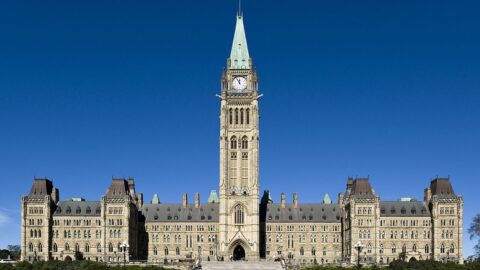
Canadians will not cast a ballot on Tuesday, but the result of the United States midterm elections will still be felt in this country, from border towns to factory floors. As American candidates enter the final weekend of campaigning, Ottawa is watching a vote that could change the trade pressure Canada faces, the politics of tariffs, and the room Ottawa has to pursue the diversification strategy it showcased in Montreal last week.
The stakes in Washington are clear. Voters will decide 35 Senate races and all 435 seats in the House of Representatives, determining whether Republicans keep control of Congress for the final two years of President Donald Trump’s term. Republicans currently hold a 53 to 47 majority in the Senate and a narrow edge in the House. More than 51 million Americans have already voted early, a midterm record, according to researchers tracking early voting.
Border states such as Ohio and Michigan are central to the fight for Congress, and their consumers feel the trade war directly, according to weekend reporting on the campaign. For Canada, that matters because cross border supply chains run through those states, and because tariff disputes over steel and autos have already raised costs on the factory floor. A Congress more willing to challenge tariff policy would change Ottawa’s calculations, while a Congress that backs it would leave Canada leaning harder on new partners.
Montreal as a hedge, not a replacement
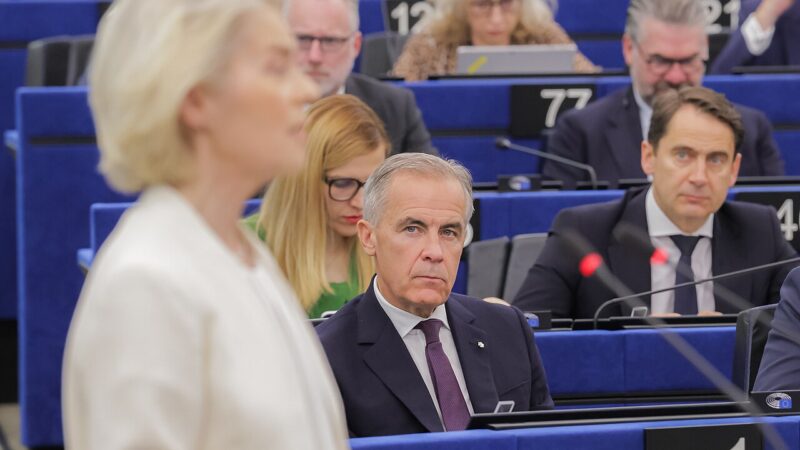
The Canada-EU summit landed days before the midterms, and both partners are dealing with a more protectionist Washington. The alliance for the future, with its digital trade deal, critical minerals cooperation and supercomputing access, is best understood as a hedge: it gives Canada more options, but it does not replace the American market, which still takes the large majority of Canadian merchandise exports.
That is why the midterm result will be read in Ottawa as a trade signal as much as a political one. A Democratic House, a Republican hold, or a split result would each send a different message about how much pressure Congress will put on tariff policy, and about how quickly any change could arrive. Canadian exporters, provincial governments and federal negotiators will all be parsing the same returns on Tuesday night, for different reasons.
What to watch on Tuesday night
The first clues will come from the closest Senate races and from House districts in manufacturing states, where trade policy is a daily issue rather than an abstraction. Early voting totals, court disputes over ballots in states such as California, and the Alaska Senate investigation may affect how quickly results are accepted, and how much confidence each side places in them.
For Canada, the lesson of the final weekend is patience. The Montreal alliance was built for a longer horizon than one American election cycle, and its value does not rise or fall on a single night. But Tuesday will shape the weather in which that alliance must operate, and Ottawa will be watching it closely.