Canada's flu season is officially under way, and public health officials are opening it with an awkward number: only about a third of Canadian adults got a flu shot last season, the lowest uptake in a decade — down from 44 percent just three seasons earlier.
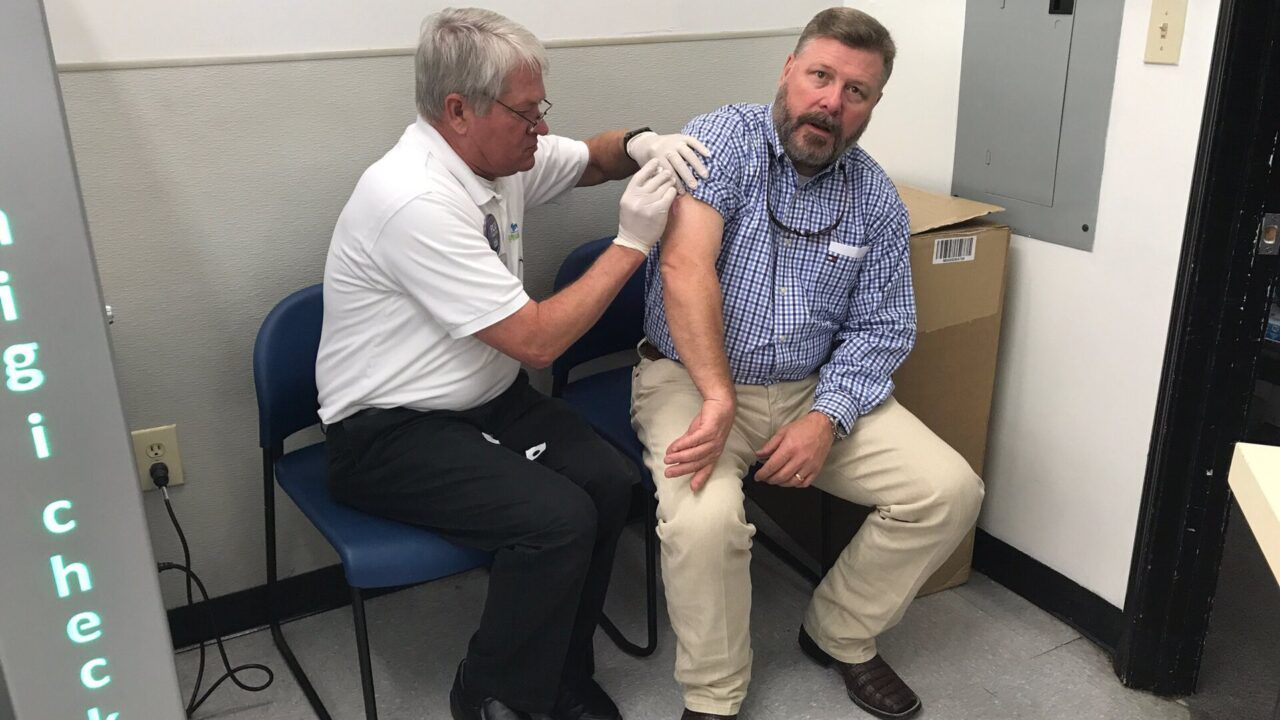
The figures anchor this year's immunisation campaign, which is leaning heavily on pharmacies. Sixty percent of vaccinated adults now receive their shot at a pharmacy, up from 28 percent less than a decade ago, and pharmacy banners are again leading the public push to book early rather than wait. The Public Health Agency of Canada's own review this year concluded that delaying vaccination in hopes of perfectly timing protection gains little — and risks people missing the shot entirely if the season starts early, as officials warn it is doing.
The stakes are in the hospital data. Hospitalisations from vaccine-preventable respiratory diseases have more than doubled compared with pre-pandemic levels, reaching 142 per 100,000 residents in 2024-25, with influenza alone accounting for 19,225 hospitalisations. Each of those cases represents a bed, in a hospital system that enters every winter already full.
Canadian researchers also supply much of the continent's early evidence on how well each year's vaccine works. The Canadian Sentinel Practitioner Surveillance Network — family doctors across Alberta, British Columbia, Ontario and Quebec — publishes the first effectiveness estimates most seasons; its recent work found the shot cut the risk of serious flu illness by roughly 40 percent even in a season when the vaccine imperfectly matched the dominant H3N2 strain. The message officials draw from that: a mismatched shot is still a shield, and the perfect is the enemy of the vaccinated.
This season's campaign therefore runs on two tracks — availability, through pharmacies, clinics and workplaces; and persuasion, aimed at the complacency that two mild-feeling seasons and a decade of pandemic argument have bred. Thanksgiving gatherings, officials note dryly, are traditionally the season's first superspreading events.
The flu shot will not make headlines the way outbreaks do. That is rather the point of it — and of the 34 percent problem Canada's health agencies are determined to move this winter.
The decline in uptake mirrors a North American pattern that researchers tie to several forces at once: pandemic-era argument about vaccines in general, two recent seasons that felt mild to the public, and the simple friction of booking anything in a strained primary-care system. Pharmacies absorbed much of that friction — walk-in availability is precisely how their share of vaccinations climbed to 60 percent — which is why this year's campaign is built around them, with provincial booking systems routing patients to the nearest participating location.
Officials are also pressing the timing argument harder than usual. Flu immunity takes about two weeks to build, and early-season activity has a habit of arriving before the publicity does. The Public Health Agency of Canada's 2026 review of vaccination timing found that waiting for a theoretically perfect window typically costs more protection than it gains — shots missed entirely while people deliberate. The advice this autumn, delivered with uncharacteristic bluntness, is to take the first available appointment.
For employers and schools, the arithmetic is identical every year and ignored every year: a vaccinated workplace loses fewer January weeks to absence. For individuals, the argument is older than the pandemic and has survived it: influenza kills Canadians in the thousands in a bad season, quietly, mostly among the elderly and the chronically ill — which is to say, among the people the 34 percent are being asked to protect as much as themselves.