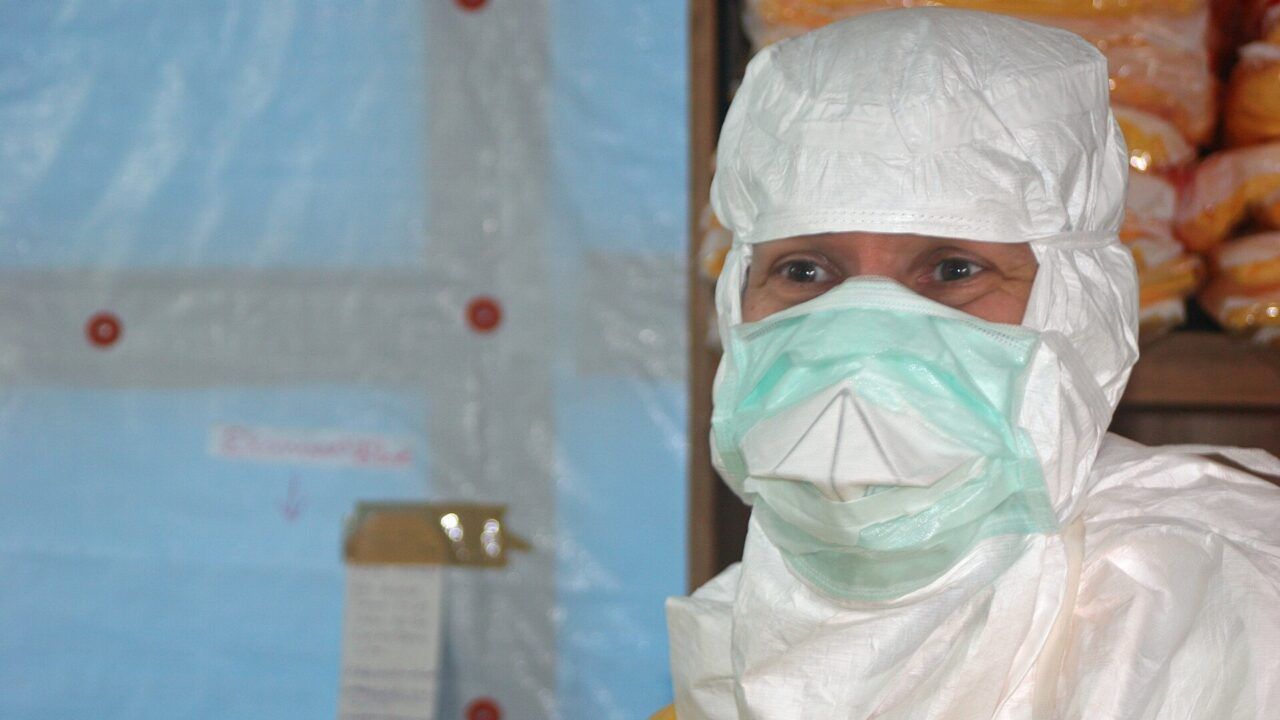
Kenya has confirmed its first case of Bundibugyo Ebola virus disease — a fatal one — marking a geographic expansion of the Congo-centred outbreak that has global health officials re-drawing their risk maps this week.
The case, documented in a report published October 8 in the medical literature, makes Kenya the latest country pulled into an outbreak that has already reached 8,728 confirmed cases and 4,205 deaths across seven Congolese provinces. The Bundibugyo species is the outbreak's defining problem: unlike the Zaire strain behind West Africa's catastrophic 2014-16 epidemic, it has no approved vaccine and no licensed specific treatment.
That absence dictates the entire response doctrine — identify cases fast, isolate them, trace every contact for 21 days, and bury the dead safely. It is labour-intensive, deeply local work, and it fails wherever insecurity, distance or distrust intervenes. In eastern Congo, all three intervene constantly, which is how an outbreak becomes 64 health zones wide.
Kenya's confirmation triggers a different tier of concern. Nairobi is East Africa's transport and commercial hub; the country's borders with Uganda, South Sudan, Ethiopia and Tanzania carry enormous daily movement, much of it informal. Kenyan health authorities have activated screening and preparedness protocols at border points and airports, and regional bodies are coordinating on surveillance — the drill rehearsed in every East African Ebola scare since 2014, now performed for a strain without a vaccine backstop.
For Canada and other distant countries, the immediate risk calculus is unchanged: Ebola travels through direct contact with bodily fluids, not through the air, and imported cases are containable where health systems are strong. What travels faster is economic and humanitarian pressure — flight connections scrutinised, aid workers rotated, and a response in Congo that remains underfunded relative to its case count.
Virologists add one more reason for attention: every additional country and every additional week of transmission is an opportunity for the virus to be studied — and for the world to learn, again, that the time to finance outbreak response is before the map starts expanding. Kenya's single fatal case may remain single. The systems now watching for the second one are the whole argument for preparedness.
Kenya has rehearsed this moment before. The country built Ebola screening into its border and airport systems during the West African epidemic and has maintained rapid-response capacity through repeated regional scares since. Its public health emergency operations centre can sequence, trace and isolate at a standard many wealthier countries would envy — one reason regional officials treat a single imported case in Kenya as a test of the system rather than the beginning of a spiral.
The harder problem is not in Nairobi. It is in the Congolese provinces where transmission continues at scale, where each new health zone added to the list represents another surveillance net with holes in it. Outbreaks of this shape end when the response reaches the last village on the last road — financed, staffed and trusted. International appeals have chronically lagged the epidemic curve in Congo, and epidemiologists warn that every month of underfunding at the source raises the probability of more Kenyan-style exportations.
Canada contributes to the global response through WHO and humanitarian channels, as it did with personnel and funding in earlier Ebola emergencies. Whether those contributions scale with an outbreak that now counts more than 8,700 cases will be a quiet test of the commitments made after the last one. The virus, meanwhile, keeps its own schedule.