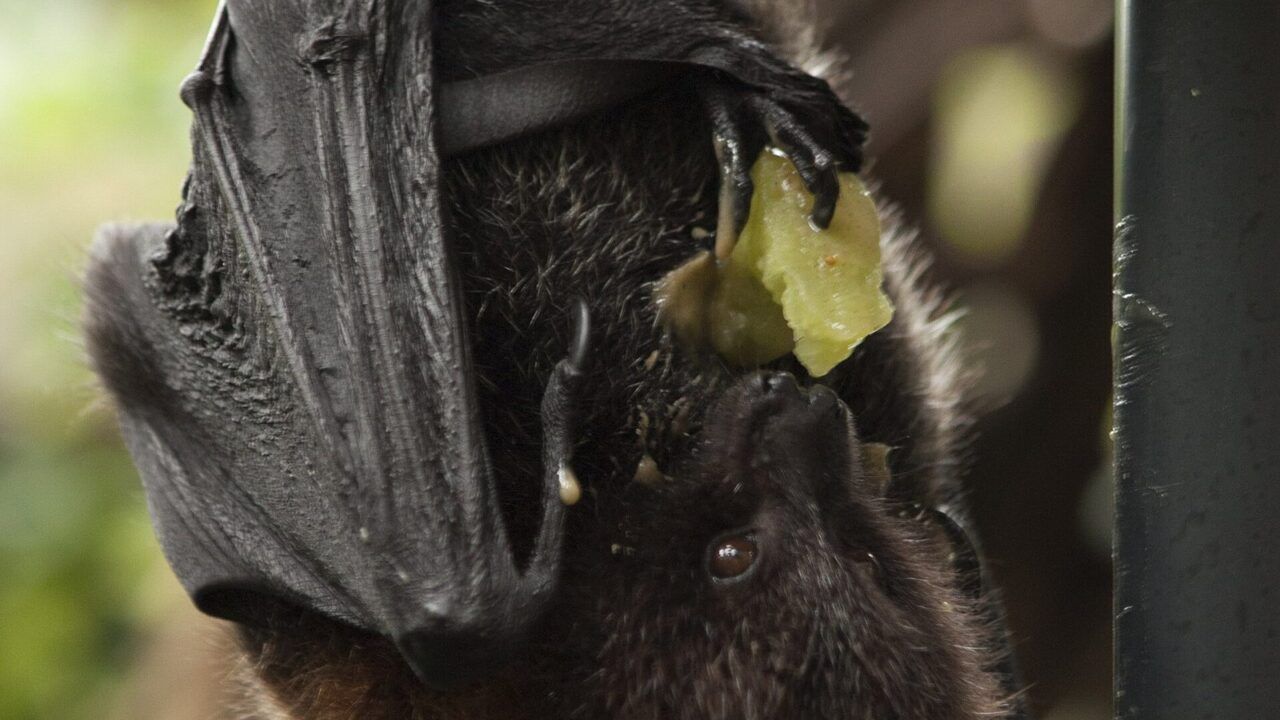
Researchers in West Bengal have reported detecting Nipah virus antibodies in local bat populations, a finding that reinforces why the fruit bats of South Asia are under permanent scientific surveillance for one of the world's most dangerous viruses.
According to the reported findings, evidence of Nipah exposure in bats does not mean an outbreak is under way — it means the virus circulates silently in its natural reservoir, as it is known to do across the region. Nipah spills into humans rarely but catastrophically: through contaminated date-palm sap, fruit partially eaten by bats, or close contact with infected animals and patients. Human outbreaks, recorded periodically in Bangladesh and India's Kerala and West Bengal, carry fatality rates that have ranged from 40 to 75 percent.
Nipah sits on the World Health Organization's priority list for good reason. It causes encephalitis and severe respiratory disease, spreads person-to-person in caregiving settings, and has no approved vaccine or treatment — the same threat profile that makes every serological survey in bat country worth doing. Finding antibodies in bats is the surveillance system working: it confirms where the virus lives so that human cases, when they appear, are recognised in hours instead of weeks.
The practical guidance in affected regions is well established and unglamorous: do not drink raw date-palm sap, wash and peel fruit, keep bats out of food and water storage, and isolate suspected cases immediately with strict infection control. Kerala's repeated demonstrations that rapid response can contain Nipah clusters within a handful of cases are the region's standing proof that early detection is the entire game.
West Bengal shares geography, bats and food culture with Bangladesh, where Nipah is seasonal and feared. Cross-border scientific attention to the reservoir — rather than only to human cases — is how health systems buy the one commodity Nipah never grants twice: time.
The finding will not change daily life in the state this week. It will go into the maps and the models, it will justify the next round of surveillance funding, and it may one day be the reason an outbreak was caught at case one instead of case fifty.
Surveillance of this kind is the unglamorous backbone of outbreak prevention. Serology surveys — testing bat blood for antibodies that show the virus has passed through — tell scientists which species carry Nipah, where, and in what seasons. Combined with data on bat feeding and roosting near human food sources, that evidence becomes a risk map: the districts where a spillover is most likely, and the months when clinics should be watching for encephalitis cases that do not fit the usual pattern.
The record shows what that watching buys. Kerala, which suffered a deadly first Nipah encounter in 2018, has since contained repeated introductions to a handful of cases or fewer, using genomic sequencing, aggressive contact tracing and hospital infection control drilled between outbreaks. Each response began with a laboratory recognising an unusual case quickly — the exact capability that reservoir maps and clinician awareness exist to build.
West Bengal's researchers are adding their state's data to that regional picture. The antibodies in its bats are not an emergency; they are an entry in the ledger that decides whether the next emergency gets caught at the first patient. In Nipah country, that is the only victory available in advance.