

On Monday, Albertans will vote in what officials are calling the largest voting moment in the province’s history: 10 referendum questions covering immigration, the Constitution, and the province’s future inside or outside Canada. Here is what each part of the ballot means, and what a yes or no vote would actually trigger.
The vote was set in motion earlier this year when Premier Danielle Smith promised a referendum on immigration, social services and constitutional questions arising from her government’s Alberta Next town halls. Nine questions were approved in March; a tenth, on the province’s relationship with Canada, was added in May.
Question 10: the separation question
The question asks whether Alberta should remain a province of Canada, or whether the provincial government should begin the legal process required under the Canadian Constitution to hold a binding provincial referendum on whether Alberta should separate. In short, it is a referendum on whether to hold a referendum, in the middle of the province’s heated referendum campaign – a yes vote on Monday would not itself take Alberta out of Canada.
All 10 questions are non-binding. Premier Smith has said she would accept 50 per cent plus one as the threshold and would begin the legal process for a binding vote as soon as possible, possibly as early as spring 2027. She has also said that if Albertans choose to remain, there will be no second separation vote while she is premier. Polling has consistently shown roughly two-thirds of Albertans favouring staying in Canada.
Questions 1 to 9: immigration, services and the Constitution
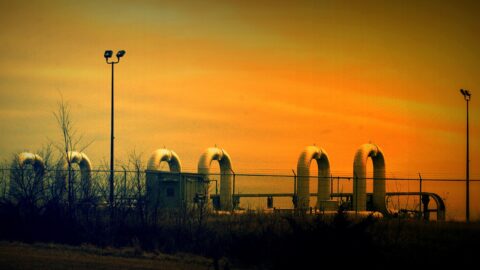
The other nine questions cover provincial control over immigration, access to social programmes and health care for non-permanent residents, proof of citizenship to vote, equalization payments, and constitutional proposals – including abolishing the Senate and giving provincial laws priority over conflicting federal laws. Only some fall fully within Alberta’s jurisdiction; the constitutional changes would require Ottawa’s cooperation or a formal amendment process, according to detailed explainers of the ballot. Energy politics also shadows the vote, as Ottawa and the provinces spar over which major pipeline projects should be fast-tracked.
Practically, advance polls are open from October 13 to 17, and Elections Alberta approved and mailed more than 652,000 special ballots by late September. Question 10 will be counted first at every location, followed by questions 1 through 9. Unofficial results are required within 48 hours of polls closing; official results are scheduled for October 29. And Albertans are not the only voters heading to the polls this month: in British Columbia, party leaders debated this week ahead of that province’s October 24 vote.