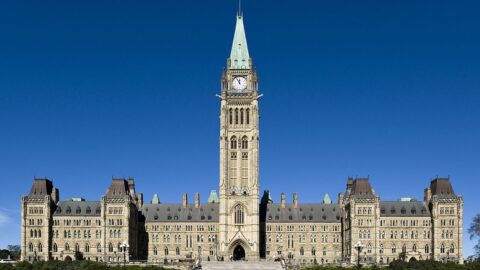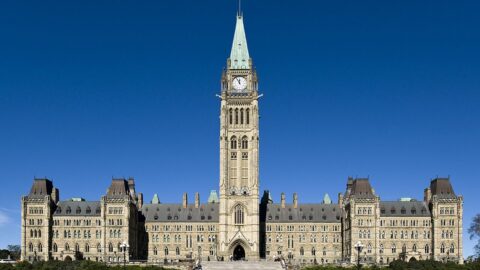

Prime Minister Mark Carney government presented a budget on Thursday designed to reduce reliance on the United States, which remains Ottawa priority despite the midterm election rebuke suffered by United States President Donald Trump. The budget, titled Masters of Our Destiny, proposes 142.1 billion Canadian dollars in multiyear spending and tax breaks, including incentives to attract investment and billions for energy, infrastructure and culture. The government projects total spending of 603 billion Canadian dollars and a deficit of 62.3 billion for 2026-27, 3 billion less than forecast in April.
Why it matters
The budget declares plainly that the United States is upending global trade, and it forecasts that Trump trade war will slow Canadian growth to just 1 percent in 2026 and 1.7 percent in 2027. Carney has argued that relations with the United States have been permanently altered and that pre-Trump tariff free trade will not return. Finance Minister Francois-Philippe Champagne, who presented the budget to Parliament, said that no matter what happens south of the border, Canada will be more resilient, stronger and more independent. The message is that Ottawa no longer treats the trade dispute as a temporary storm.
The centrepiece for business is a productivity mega deduction that will allow firms to immediately write off the full cost of eligible capital assets on a permanent basis. The measure cuts Canada marginal effective tax rate on new business investment from 13 percent to 6.4 percent, which the government claims will make Canada more tax competitive than the United States. The budget also promises 181.4 million dollars over four years to expand Invest in Canada, the federal agency that works to attract global investment, so it can expand its presence in key global markets and deliver future investment summits.
What happens next
The budget also allocates funds toward the major national projects Carney has tagged as crucial to Canadian economic sovereignty, including infrastructure for energy production and critical mineral mining. Carney, a former governor of the Bank of Canada and the Bank of England, aims to double exports outside the United States by 2035 while forging closer ties with Europe and Asia. The budget comes two days after Democrats gained control of the United States Congress, weakening Trump political position as the two countries pursue a possible trade agreement, and LeBlanc noted that negotiations will be held with the White House, not Congress.
Parliament now faces the harder job of testing the budget rather than cheering it. Budget bills in Canada are confidence votes, and last year Carney government needed opposition support and abstentions to survive, but his Liberals have since secured a parliamentary majority. Notably missing was a detailed breakdown of support for small and medium sized businesses affected by United States tariffs, and the government said only that it would provide flexibility for regional development agencies to tailor support. Members of Parliament should press for that detail, because the firms waiting for it cannot plan hiring or investment on a promise alone.