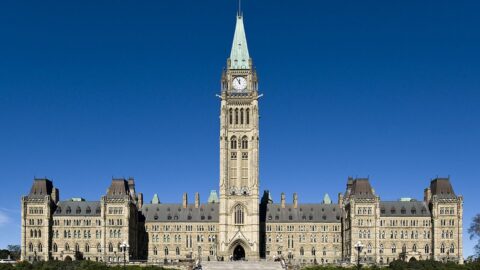

Any enhanced partnership between Canada and the European Union will require a vote in Canada Parliament, and that single condition shapes everything that follows from Montreal. Prime Minister Mark Carney has said so himself, and the commitment matters because the most ambitious language from the summit, associate membership, has no basis in European Union treaties and no agreed definition yet. Parliament cannot vote on a phrase. It will have to vote on a substance that is still being negotiated, with a deadline of June 2027 for concluding those negotiations.
The parliamentary test cuts both ways. On one side, it gives the government a democratic anchor: a closer association with Europe, involving policy alignment, participation in European Union programmes and a stable governance framework, is a constitutional scale change in Canada’s external relations, and it should face a vote. On the other side, it creates a domestic clock that runs alongside the diplomatic one. The March review, when the European Commission meets the Canadian government to assess progress, will be read in Ottawa not only as a diplomatic stocktake but as preparation for a parliamentary debate in which the government must show concrete benefits.
What Parliament will be asked to judge is already partly visible. Montreal produced a digital trade agreement in substantive negotiation, a framework for European Investment Bank backing of Canadian critical minerals projects, cooperation between Frontex and the Canada Border Services Agency, Canadian participation in the European High Performance Computing Joint Undertaking, and an intention to join the European Union 90 billion euro Ukraine support loan. Talks on Erasmus participation are to begin. Each item can be defended on its merits. Together, they still do not add up to a defined associate membership, which is why the joint declaration commits the two sides to defining the concept by their 2027 summit.
The wording fight is the substance fight
The wording dispute at Montreal was not pedantry. Germany and other member states objected to the associate member term, and the final declaration instead commits Canada and the European Union to ever closer association short of full membership. Ottawa retained the associate membership ambition in its own announcement, saying the scope would be determined in the coming months. That gap between the joint text and the Canadian text is the space Parliament will eventually have to close: either the definition converges, or the vote will be on a Canadian ambition that Brussels has not formally adopted.
Provincial interests will also shape the vote. Critical minerals projects, energy exports and defence orders touch provincial jurisdiction and provincial jobs, and the Galvion helmet order for Latvia, worth more than 44 million Canadian dollars, shows how European defence cooperation can already reach a Montreal factory floor. A feasibility study into long term liquefied natural gas exports to Europe, and work on jointly stockpiling strategic resources, will similarly be read province by province. The Montreal partnership review in March should therefore be judged not only by what Brussels says, but by what Ottawa can show Parliament about jobs, investment and security at home.
What a credible vote needs
A credible parliamentary vote needs three things before June 2027: a written definition of the partnership, a list of programmes Canada will join and on what terms, and a governance framework that explains how disputes are resolved. Without those, Parliament would be asked to endorse a direction, not a deal. With them, the Montreal summit will have become what its supporters claim: the closest partnership the European Union has with a non member, built in response to tariff pressure from Washington. The vote is the mechanism that turns a summit declaration into a national commitment, and it is why the next six months matter more than the two days in Montreal.